
🌟 Introduction
- Defining the Transformation: Establish the core premise—how the UAE is moving from a traditional, hydrocarbon-dependent economy to a dynamic, knowledge-based, and digitally driven global hub.
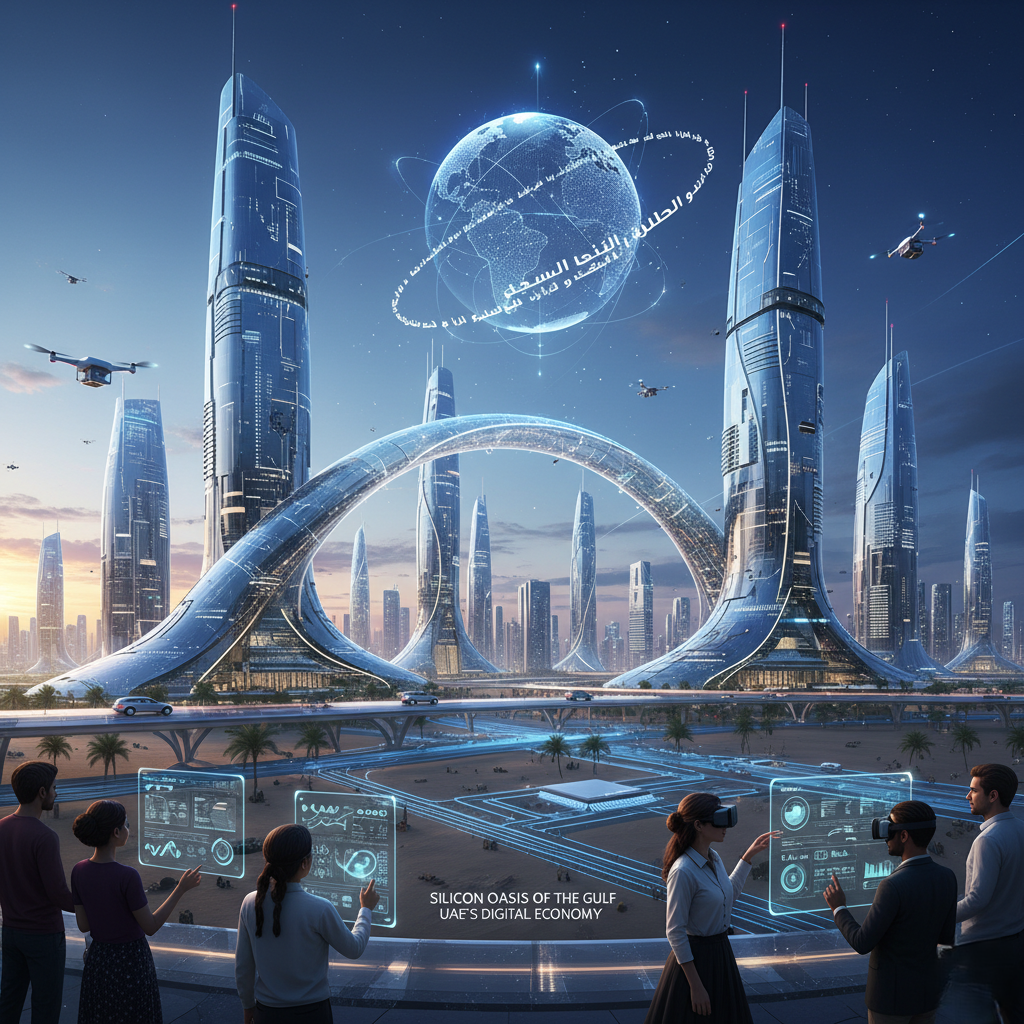
- The Metaphor of the ‘Silicon Oasis’: Explain that this title refers not just to the specific free zone (Dubai Silicon Oasis) but to the UAE’s overarching ambition to be the technology and innovation capital of the Middle East and North Africa (MENA) region.
- Key Visionary Goals: Introduce major long-term strategies like UAE Centennial 2071 and the Digital Economy Strategy (2022-2032), which aims to double the digital economy’s contribution to the GDP to over 19.4%.
I. 🏛️ Laying the Digital Foundation: Government and Strategy
1. Visionary Leadership and Digital Governance
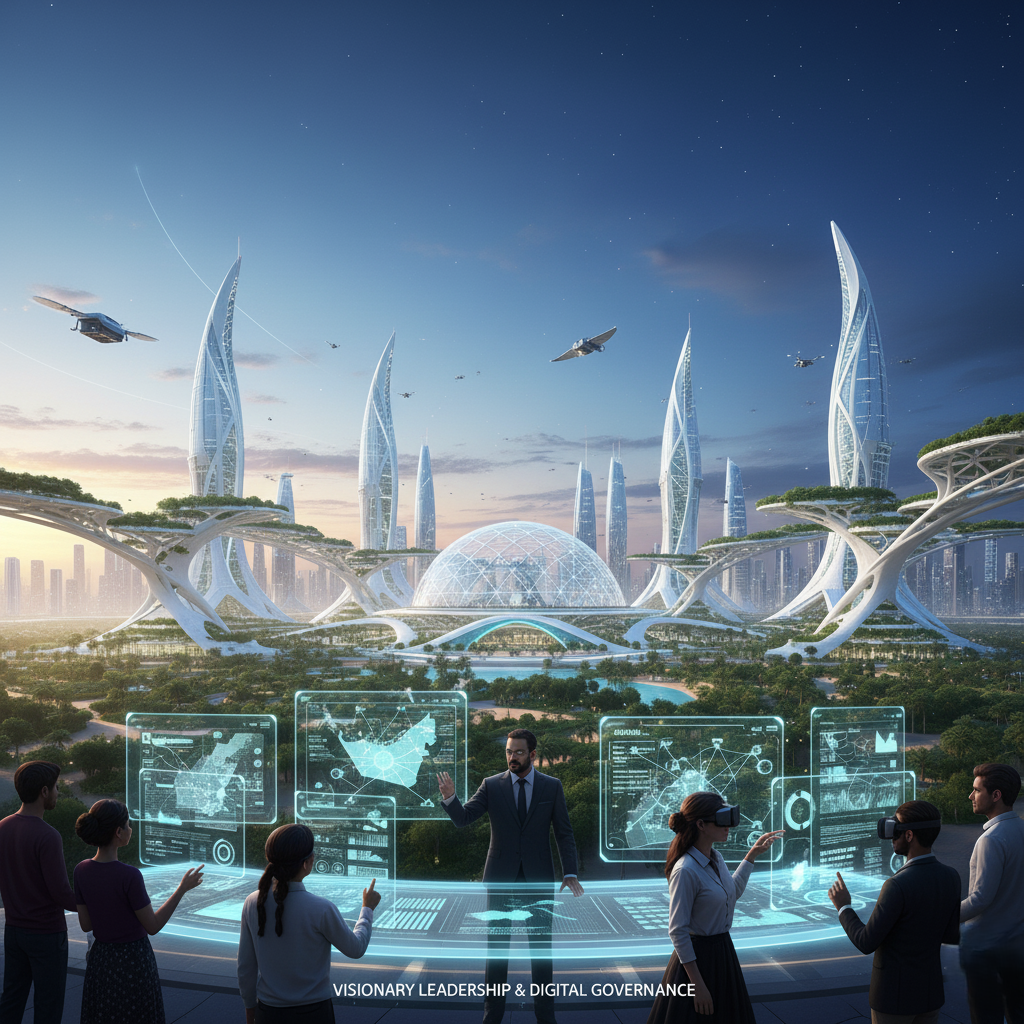
- Government as the Enabler: Discuss the proactive role of the government in mandating digital transformation across all sectors.
- Digital Government Initiatives: Highlight flagship platforms like the TAMM platform (Abu Dhabi) for consolidated government services and the implementation of AI within federal and local entities (e.g., Dubai’s GDRFA).
- Institutional Framework: The establishment of the Ministry of State for Artificial Intelligence, Digital Economy, and Remote Work Applications—a unique structure emphasizing national priority.
2. World-Class Infrastructure and Connectivity
- 5G Supremacy: Detail the rapid and widespread rollout of 5G networks, positioning the UAE as a global leader in connectivity speeds and penetration, which is vital for IoT and smart city applications.
- Smart City Development: Analyze the development of initiatives like the Dubai Digital Park (DDP) and how Abu Dhabi consistently ranks high in global Smart City Indices, focusing on resident experience and safety.
- Data Centers and Cloud Investment: Discuss significant foreign direct investment (FDI) from global tech giants (Microsoft, Amazon Web Services) establishing large-scale regional cloud and data center hubs.
II. 💡 The Pillars of the Digital Economy
3. Artificial Intelligence (AI) and Advanced Technology
- National AI Strategy: Focus on the UAE’s aggressive push into AI, including the appointment of a dedicated AI Minister and the focus on ethical governance.
- The Rise of G42: Profile this Abu Dhabi-based AI powerhouse and its collaborations with international partners (like Microsoft) on large-scale projects, including supercomputers and large language models (LLMs).
- Space Technology and Research: Use the Hope Mars Mission and other space exploration projects as evidence of the UAE’s high-tech capabilities and aspiration beyond earth-based economies.
4. FinTech and Digital Financial Transformation
- Regulatory Sandboxes: Explain the role of financial free zones like DIFC (Dubai International Financial Centre) and ADGM (Abu Dhabi Global Market) in creating “sandboxes” to nurture FinTech startups.
- Digital Payments and Central Bank Digital Currency (CBDC): Discuss the push towards cashless transactions and the exploration of a digital Dirham to modernize the monetary system.
- Blockchain Adoption: Highlight the use of distributed ledger technology (DLT) in areas such as trade finance, customs, and digital identity management.
5. E-commerce, Logistics, and Smart Trade
- E-commerce Boom: Detail the explosive growth of the e-commerce sector, driven by high disposable income and strong logistics networks (Emirates SkyCargo, DP World).
- Logistics Tech: Analyze the integration of IoT, AI, and robotics in key free zones and ports to create highly efficient supply chains.
- Digital Trade Facilitation: Discuss the digitalization of customs and trade processes to make the UAE a faster and cheaper trade gateway.
III. 🧪 The Ecosystem: Incubating Innovation
6. Specialized Free Zones and Innovation Hubs
- The Role of DSO and DIC: Detail the specific functions of Dubai Silicon Oasis (DSO) as an integrated technology park and Dubai Internet City (DIC) as a base for global tech majors.
- The Cluster Approach: Explain how the UAE groups industries (e.g., Media City, Knowledge Village) to create focused clusters that share resources and talent.
- Expo City Dubai & Green Tech: Discuss the legacy of Expo 2020 and its transformation into Expo City, focusing on sustainability technology and Green Innovation Districts.
7. Talent Acquisition and Human Capital Development
- Attracting Global Talent: Analyze the impact of new residency schemes, such as the Golden Visa and Green Visa, designed specifically to attract and retain high-skilled professionals, entrepreneurs, and remote workers.
- Educational Transformation: Detail the government’s investment in STEM and coding education, and the introduction of specialized AI and data science degrees in national universities.
- Upskilling the Workforce: Discuss national programs aimed at upskilling the existing Emirati workforce to participate actively in the knowledge economy.
IV. 🚀 Challenges and the Global Outlook
8. Navigating Challenges
- Cybersecurity Threats: A rapidly digitized economy presents a larger surface area for sophisticated cyberattacks, necessitating continuous investment in national cybersecurity infrastructure.
- Regional Competition: Acknowledge the intense competition from neighboring Gulf states (like Saudi Arabia) also pursuing ambitious digital transformation agendas.
- The Need for Scale: Ensuring local tech startups have the opportunity and funding to scale beyond the local MENA market and compete globally.
9. The UAE’s Global Impact and Future Opportunities
- HealthTech and EdTech: Opportunities for deploying AI and digital solutions to transform healthcare (telemedicine, personalized medicine) and education delivery.
- Sustainable and Climate Tech: The potential for the UAE to leverage its sovereign wealth and expertise to become a leader in funding and deploying renewable energy and climate mitigation technologies.
- Regulatory Leadership: Positioning the UAE as a global leader in regulating emerging technologies (like self-driving cars, drones, and AI) in a controlled and encouraging environment.
✅ Conclusion
- Recap of Achievements: Summarize the UAE’s success in building the foundational infrastructure and attracting global tech capital.
- A Forward-Looking Model: Conclude that the UAE’s digital economy is not merely a diversification strategy but a fundamental redesign of its national identity and economic structure. It serves as a global blueprint for how rapid, state-led digital transformation can be achieved.
- Final Statement: The “Silicon Oasis of the Gulf” is thriving because it combines oil wealth with intellectual ambition, making bold bets on the future of technology.

